

2026 Downeast Digital Summer Summit
July 19-22, 2026 in Bar Harbor, Maine

About the 2026 Summer Summit in Healthcare Innovation
Leaders from across healthcare — health systems, investors, policymakers, and innovators — will convene in Downeast Maine to explore new models that can improve access and outcomes under the theme Reimagining the Delivery System.
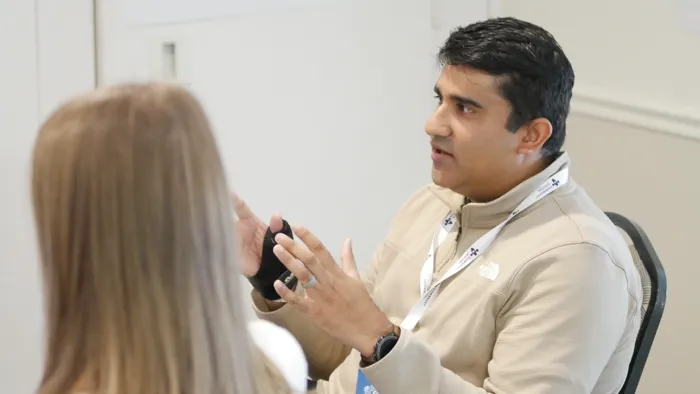
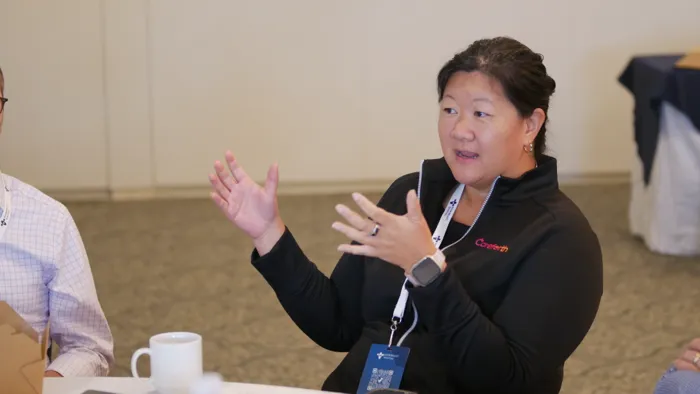
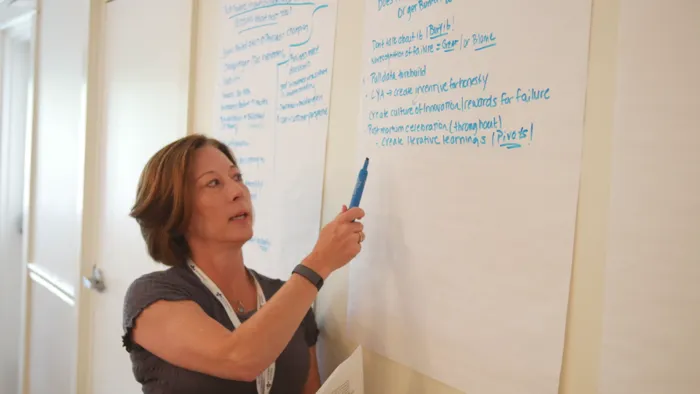
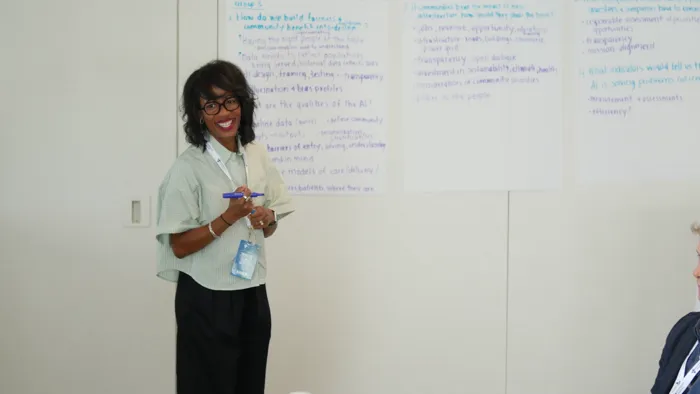
This is not a stage for keynotes you’ll forget by next week. The Downeast Digital Summit is three days of structured working sessions, honest conversation, and relationship-building with a critical mass of peers who share your commitment. Removed from Silicon Valley and the major health hubs, the unhurried coast of Bar Harbor creates the conditions that powerful convenings require: focus, candor, and space to make real change.
Every session is designed to produce practical frameworks and real commitments — not just conversation. Decision-makers attend because they leave with something actionable. The network continues year-round through lunch-and-learns, activations at national health meetings, and a dedicated community channel.
View Summit Attendees
What We Learned
What the 2026 Summer Summit Revealed About Redesigning Healthcare Delivery
The 2026 Downeast Digital Summer Summit brought together healthcare leaders, clinicians, innovators, investors, policymakers, researchers, technology leaders, and community partners to examine the best approaches to producing durable change in health outcomes. Across discussions of measurement, implementation, financing, artificial intelligence, and community benefit, a common question emerged: What must be true for new ideas to change how healthcare actually works? The Summit’s findings point beyond any individual technology or initiative. They reveal how organizational structures, incentives, capacity, and decision-making determine whether innovation produces meaningful results.
Information creates value only when it changes action
Healthcare’s problem is not always a lack of data. Organizations frequently possess substantial information about patient needs, community priorities, operational failures, and emerging risks. The deeper problem is that this information often does not reach someone with the authority, resources, and accountability to respond.
This distinction appeared across conversations about community measurement, Medicaid coverage, predictive AI, and organizational performance. A dashboard, risk score, or community assessment has limited value if it does not influence what leaders prioritize, fund, or do. The more useful question is therefore not simply, “What should we measure?” but “What decision will change because we measured it?”
A successful pilot and a system ready to operationalize it are different things
Healthcare organizations often treat positive pilot results as evidence that an innovation is ready to scale. The Summit surfaced a more demanding conclusion: proving that an intervention can work does not prove that an organization can absorb it.
Pilots may benefit from motivated champions, protected resources, unusually receptive sites, and intensive support. Routine operations introduce workforce constraints, competing priorities, workflow variation, governance requirements, and real budget pressures. Operationalization must therefore be designed and tested alongside the technology itself. The Summit also challenged the idea that every successful pilot should scale. A well-designed pilot succeeds when it produces a credible decision, including a decision to modify, limit, or stop an intervention.
Healthcare needs better-matched capital, not simply more capital
Many valuable healthcare innovations do not fit conventional expectations for rapid growth, high margins, and relatively quick financial returns. They may require extended implementation, service-intensive delivery, community trust, or years before benefits become visible. In other cases, the organization financing the intervention is not the organization that captures the resulting value.
The Summit therefore reframed financing as a capital-design problem. The relevant question is not only how to attract more investment, but what form of capital, time horizon, return structure, and accountability model fit the underlying healthcare problem. Longer-term capital may be necessary, but it cannot substitute for evidence, milestones, and performance discipline.
Participation matters when it changes authority, design, and benefit
Inviting patients or communities to react to an already-designed solution is not the same as involving them in defining the problem. Participants repeatedly argued that lived experience should inform what success means, which risks matter, how interventions are implemented, and whether the resulting benefits reach the people most affected.
The same issue extends to AI governance and digital infrastructure. Representation at the table has limited value when there is no pathway from input to decision authority. The Summit also raised a harder question: if communities contribute data, experience, trust, or implementation capacity, how should they participate in the value created? The direction was clear, but practical governance and benefit-sharing models remain unresolved.
What This Means
Taken together, the findings suggest that healthcare transformation succeeds when the surrounding system is redesigned with the intervention. Measurement must connect to accountability. Technology must connect to workable clinical and operational pathways. Financing must match how and when value is created. Governance must include the people who experience the consequences of decisions.
Transformation fails when these elements are treated as separate workstreams. A technically strong product cannot compensate for an organization that lacks implementation capacity. Better prediction cannot improve care without someone able to intervene. Community input cannot shape outcomes if it remains disconnected from authority and investment. The central challenge is therefore not simply producing more innovation. It is aligning the conditions that allow useful innovation to become durable healthcare practice.
One Important Unresolved Question
Healthcare value frequently crosses organizational boundaries: one institution funds an intervention, another captures the savings, and patients or communities experience the consequences. Who should finance, govern, and benefit from shared infrastructure under those conditions? Integrated systems offer one possible model, but much of healthcare remains fragmented. The Summit did not resolve how fragmented organizations can collectively support capabilities whose costs and benefits are distributed across multiple stakeholders.
Explore the Full Proceedings (Available Soon)
The full 2026 Downeast Digital Summer Summit Proceedings will examine the analytical record behind these findings, including detailed session conclusions, connections across discussions, areas of agreement and disagreement, and actions available to different healthcare stakeholders. It will also explore the innovator cases, financing alternatives, policy implications, implementation barriers, unanswered questions, and areas where further evidence is needed.
Gallery
















Attendee Comments
Coming soon…
Summer Summit Sponsors


Interested in Sponsoring an Upcoming Event?
Downeast Digital offers unique, high-impact sponsorship opportunities for organizations committed to equity, innovation, and partnership.
Email admin@downeastdigital.org to inquire.